.png)
Translation - Two Legal Translation Modes
Convert complex text and documents between languages while preserving legal terminology and contextual accuracy.
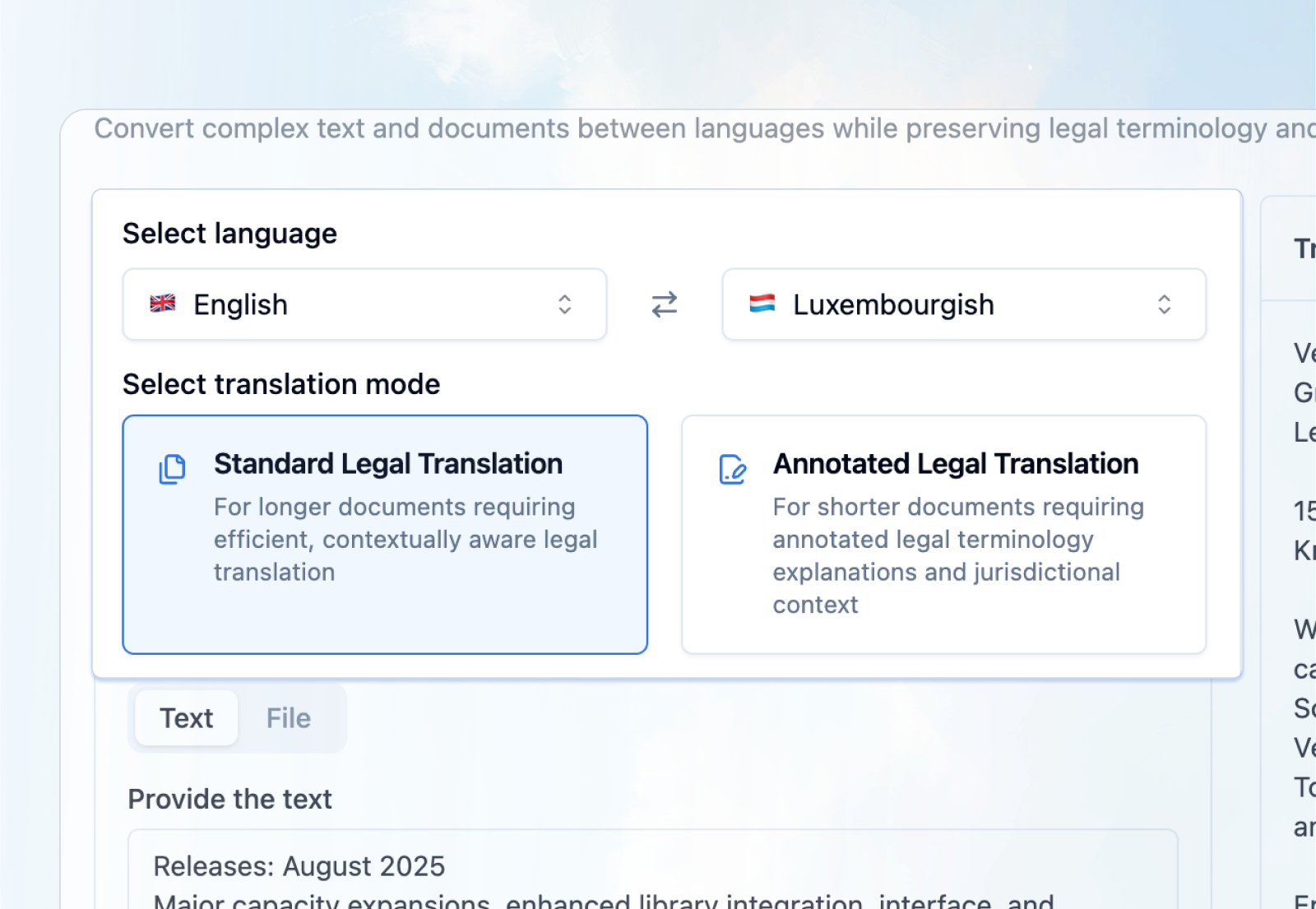

In this Tutorial we go through the two modes of translation with casepal.
Standard legal translation:
Best for: Longer documents requiring efficient and contextually aware legal translation
Focus: Translating the full document while preserving legal meaning and terminology
Output: Clean, readable translation maintaining document structure
Use when: You need to understand the full content of contracts, judgments, regulations, or correspondence
Annotated legal translation:
Best for: Shorter extracts requiring annotated legal terminology explanations that preserve cross-jurisdictional context
Focus: Translating specific provisions with detailed explanations of legal terms
Output: Translation with annotations explaining technical legal terminology, especially terms that don't have direct equivalents or require jurisdictional context
Use when: You need to understand specific clauses, key provisions, or technical terms that may have different meanings across legal systems
To learn more about Translation capabilities, please read our Guide on Translation.